History

Last updated: September 02, 2026

URDANETA COMMUNITY COLLEGE LOGO MECS.png

The logo of Urdaneta Community College (now Urdaneta City University)

Urdaneta City University

Founded on a simple idea: "Education For All"

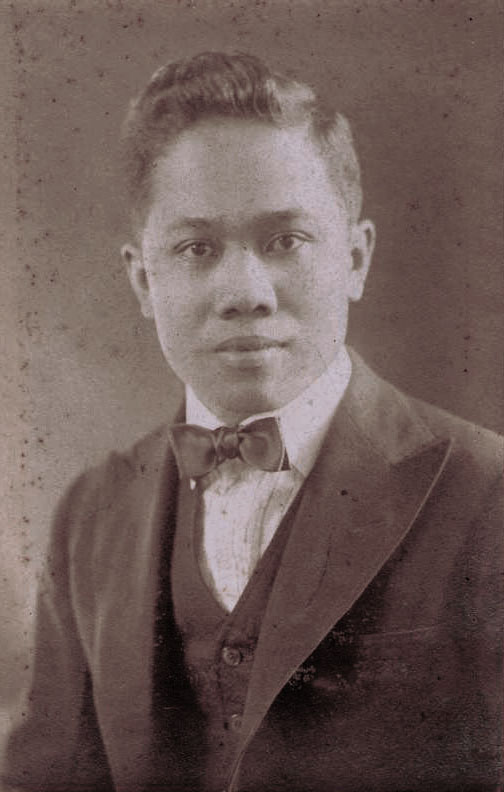
Young Dr. Pedro T. Orata

Portrait of young Dr. Pedro T. Orata, University of Illinois Class of 1924 Yearbook

Urdaneta City University (UCU) embodies the visionary spirit of Dr. Pedro T. Orata, a renowned educator and Ramon Magsaysay awardee, who championed accessible education for all. Founded as a community college with a focus on maximizing available resources, UCU has blossomed into a leading university in Pangasinan, demonstrating the transformative power of education and fulfilling Dr. Orata's dream of providing quality higher education to knowledge-hungry youth.

1966

Urdaneta City University (UCU), formerly known as City Colleges of Urdaneta (CCU) and Urdaneta Community College (UCC), stands as a testament to Dr. Pedro T. Orata's unwavering commitment to accessible education. Driven by a deep-seated belief in the potential of every Filipino, Dr. Orata founded UCU in 1966 with the support of Mayor Amadeo R. Perez Jr. and the Sangguniang Bayan, utilizing the proceeds of the town fiesta celebration. This pioneering community college, modeled after institutions in the United States, opened its doors to 144 students, primarily from rural areas. Reflecting the determination of its founding fathers, many of these early students overcame financial hardships, working various jobs to fund their education.

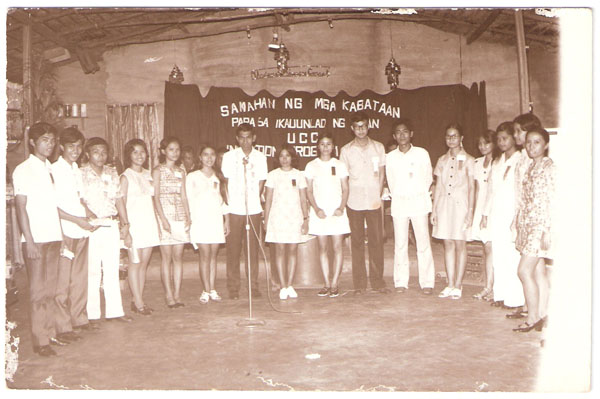
Induction Program at Urdaneta Community High School

An Induction Program held at Urdaneta Community High School with the graduates of BEED and BSE Batch 1974

1966

UCC commenced operations in 1966 with a provisional permit to offer a two-year General Education program. The Secretary of Education also approved programs for Non-formal Education in 1966, including short-term courses in agriculture and retail business to enhance the earning potential of individuals.

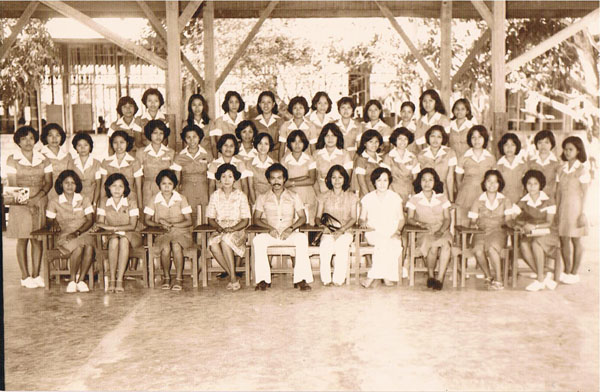
First batch of Midwifery students

Class picture of the first batch of Midwifery students with their adviser, Dr. Tablada

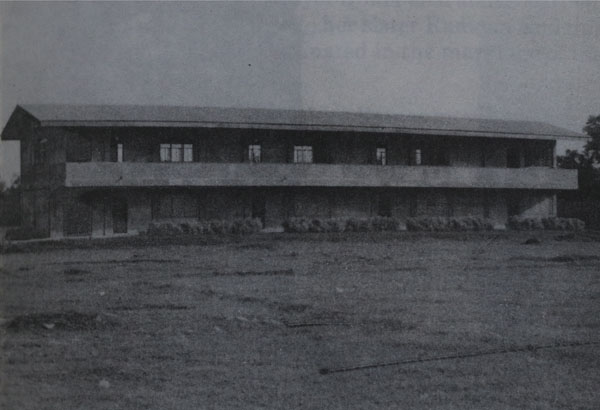
  UCC's first building

A photo of Urdaneta Community College's first building

1968 – 2002

In 1968, the successful graduation of the first batch of General Education students paved the way for the introduction of a four-year Education program. Subsequently, UCC expanded its academic offerings to meet the evolving needs of the region, incorporating programs in Midwifery (1973), Nursing (1975), Computer Education (1990), Graduate Studies (1995), Commerce and Accountancy (1996), and Caregiver Training (2002).

Early Years

Dr. Orata's philosophy of resource maximization was evident in UCU's early years. Recognizing the critical need for accessible higher education, the College wisely utilized the existing facilities of Urdaneta Community High School during its infancy, demonstrating a proactive approach that underscored Dr. Orata's belief that inaction while awaiting government support could deprive countless students, particularly those in remote areas, of educational opportunities. This pragmatic approach, coupled with the College's growing acceptance within and beyond Urdaneta City, enabled UCU to thrive and subsequently acquire and build its modern facilities.

Regional Reach

UCC achieved remarkable success despite its limited resources, consistently ranking among the top institutions in education, nursing, and midwifery. This academic excellence attracted students from across the region, including Abra, Aurora, Isabela, Ilocos, Nueva Vizcaya, Tarlac, Quezon, Mt. Province, Pampanga, and other neighboring provinces.

1998 – 2006

Following Urdaneta's cityhood on March 21, 1998, UCC underwent a name change to City College of Urdaneta in 2001 via Sangguniang Panglunsod Resolution No. 61, reflecting the expansion of its educational services under Mayor Amadeo R. Perez, Jr. This was further amended to City Colleges of Urdaneta in 2005. Notably, on January 13, 2004, UCC became the first Character School in Region I, emphasizing the importance of character development alongside academic excellence. In 2006, a significant milestone was reached when BOR Resolution No. 139 declared CCU as Urdaneta City University, a designation subsequently confirmed by the Sangguniang Panglunsod on May 8, 2006, through Sangguniang Panglunsod Resolution No. 234-06-A and City Ordinance No. 98 s. 2006.

"The attainment of university status marked a period of unprecedented growth for UCU" — new colleges in Engineering, Law, Pharmacy, and beyond followed in its wake.
Post-University Status

The attainment of university status marked a period of unprecedented growth for UCU. This new chapter witnessed a significant expansion of academic programs, including Engineering and Architecture, Criminology, Mass Communication, Social Work, Pharmacy, Library and Information Science, Psychology, Tourism, Hotel and Restaurant Management, Political Science, and various postgraduate and graduate degrees. The establishment of the College of Law, offering the Juris Doctor degree, further solidified UCU's commitment to providing comprehensive legal education. In keeping with Dr. Orata's emphasis on practical skills, UCU also established a technical-vocational unit, offering a diverse range of vocational courses.

old law library.jpg

The old location of the College of Law Library on the 3rd floor of the Administration Building.

CAMPUS GROWTH

UCU has undergone a remarkable transformation, evolving from borrowed classrooms to a modern campus boasting 28 buildings. This impressive infrastructure now includes a newly-refurbished library, state-of-the-art student centers, an audio-visual room, a multimedia library, an auditorium, a gymnasium, fitness centers, a wellness center, and renovated classrooms. Moreover, specialized facilities such as simulation rooms, mock hotels, and cutting-edge laboratories provide students with invaluable hands-on experiences, equipping them with the necessary skills for professional success.

2019

The appointment of Atty. Dar A. Diga as Acting University President in 2019 ushered in a new era for UCU. His leadership saw a rebranding initiative emphasizing core values of integrity, competence, teamwork, and transcendence, and the formalization of the "Nobility Program" honoring Dr. Orata's legacy.

2020 – 2022
iKonek Training

UCU faculty members undergo training on UCU iKonek.

The COVID-19 pandemic presented significant challenges, but UCU demonstrated remarkable resilience. The university swiftly adapted by developing "iKonek," an online learning platform, and providing rigorous training for faculty to effectively utilize both synchronous and asynchronous learning modalities. Furthermore, comprehensive COVID-19 response protocols were implemented to safeguard the well-being of the university community. This period also witnessed a significant expansion of academic offerings, with TESDA accreditation granted for vocational programs, including Computer Systems Servicing NC II, Housekeeping NC II, Food and Beverages NC II, and Caregiving NC II.

Global Recognition

Dr. Amihan April C. Mella-Alcazar's tenure as Acting University President saw a significant expansion of international partnerships, culminating in a collaborative agreement with Fulbright. This period also marked UCU's impressive debut in global rankings, including the World University Rankings (WURI) and the UI GreenMetric World University Rankings, solidifying its position as a leading institution within the region and nationally.


mceclip0.png

Some recent international rankings for the university.

Today

Located in San Vicente West, Urdaneta City, UCU has experienced significant growth, expanding from 1.5 hectares to a three-hectare campus featuring modern and refurbished academic buildings. This impressive infrastructure, including state-of-the-art facilities such as simulation rooms, mock hotels, and specialized laboratories, equips students with the necessary skills for professional success.


UCU receives 100% COPC Compliance Certification from CHED Region 1.


UCU shines globally at WURI 2025 in Busan, South Korea.

Looking Ahead

As a key institution in the region, UCU continues to serve as a vital source of skilled professionals, contributing significantly to the economic and social development of Urdaneta City and the surrounding areas. Recognizing the evolving global landscape, the university is now actively expanding its reach and preparing graduates for international opportunities.

From borrowed classrooms in 1966 to a 28-building campus today — Dr. Orata's belief that no student should wait for opportunity still shapes every hall of UCU.